
What to know before choosing Smart Film.
A little more technical context, without turning the page into a data sheet. For most projects we first review the glass, sizes, power route and the right control method for the room.
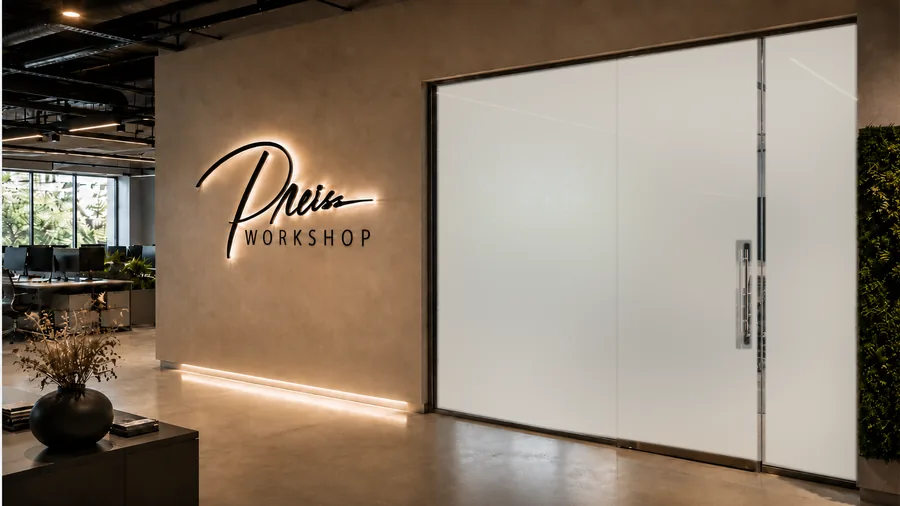
The same glass, two states.
In the OFF state the film scatters light and blocks the view. In the ON state the crystals align and the glass becomes transparent again. The room can feel open when needed and private when privacy matters.
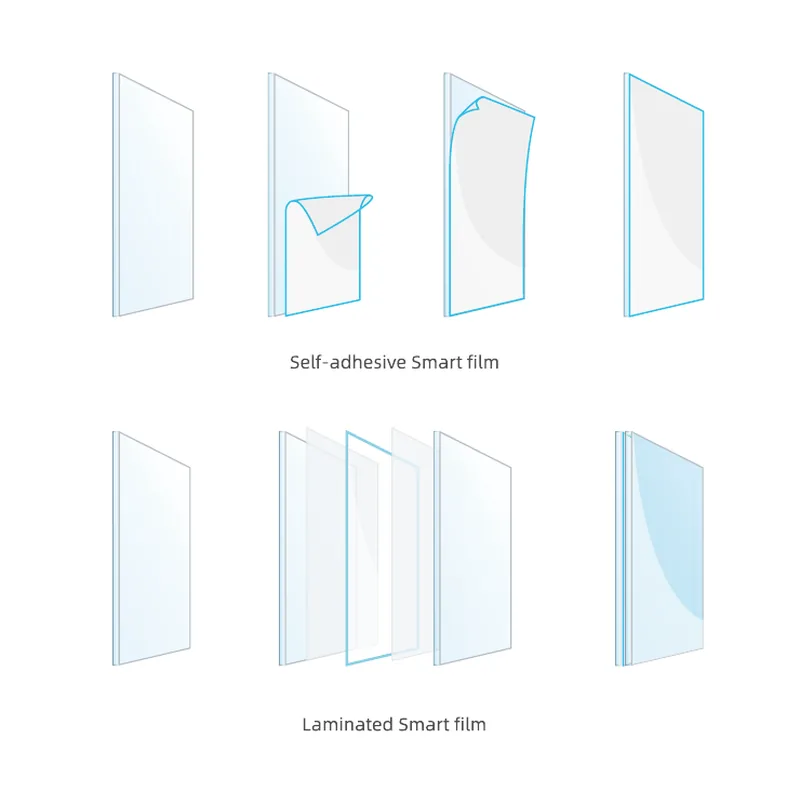
Applied film or laminated glass.
The most common route is self-adhesive Smart Film applied to existing glass. For new-build or specialist work, laminated smart film glass may be the better option. We choose this based on use, size and site conditions.
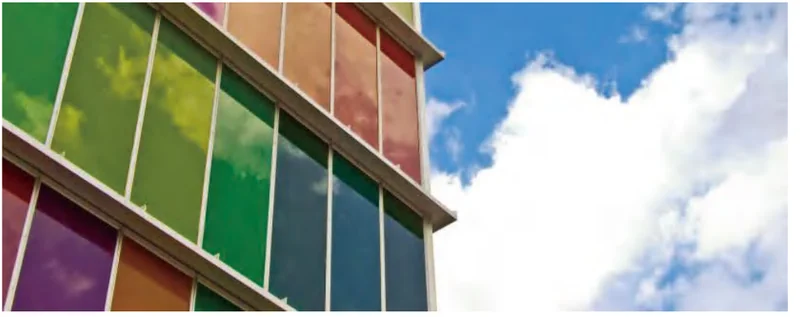
Colour is chosen for the room, not just on screen.
White film is the most neutral option, while coloured smart film can work when the glass should become part of the architecture. Colour, daylight and glass type all affect the result, so the final selection is confirmed with a sample.
The short technical version.
Exact figures depend on the product and project, but the catalogue gives a useful guide to what the system can do.
Have glass that needs to change role?
Send photos and rough dimensions. We will tell you whether Smart Film fits and which route makes the most sense.